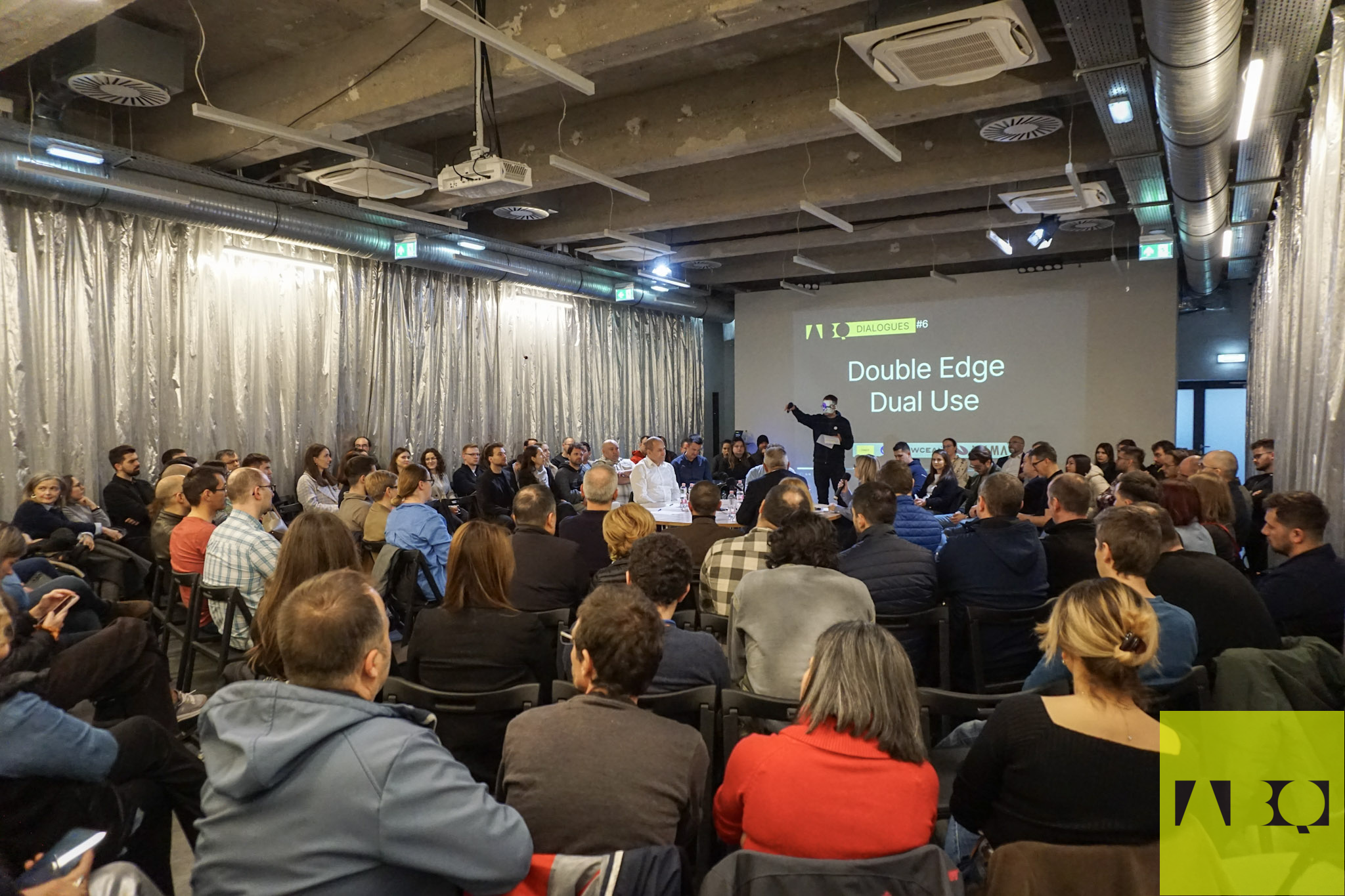
Key Findings
- Romania's SAFE (Security Action for Europe) allocation is approximately €16.68 billion — €4bn for dual-use road infrastructure, €9bn for Ministry of Defense equipment procurement, €3bn for supporting structures including cyber and military communications. Contracts must be signed by 31 May 2026.
- The traditional offshoring model has "a very short remaining lifespan": AI is collapsing the labour-cost arbitrage that built Romania's IT sector. Timișoara must shift from competing on cost to competing on competence, product ownership, and system architecture.
- Timișoara's engineering sector has a five-year window before larger Western European competitors close the gap. Those not already in the SAFE procurement conversation are late for this round.
The Automotive Reckoning
Timișoara is Romania's automotive pole. Twenty-five years of multinational investment have created a dense ecosystem of embedded systems engineers, rigorous quality processes, and supply-chain discipline. But electrification is compressing parts counts — an electric motor has a fraction of an internal combustion engine's components — and Chinese competition is accelerating. The downstream effect is closing factories and R&D lines across Europe. Ciprian Toma, Head of R&D at Piaxo with 24 years in automotive embedded systems, set the frame without euphemism: "Romania is not at all job safety right now. We see firms in the city that have laid people off. The point is that we are impacted by the transformation, and it is important to ask what we can do to get through it."
The competences, however, are real. Automotive-grade embedded systems, real-time control, sensor fusion, cybersecurity, and functional safety — all developed under rigorous standards with test coverage approaching 100 per cent. These skills transfer. The question is: transferable to what, and how fast?
Dual Use Is Not a Pivot — It Is a Bridge
Daniel Mariniuc, entrepreneur and former engineering lead at Amazon and Intel Timișoara, opened with a provocation: "Dual use is a buzzword. It is an old concept. What has changed is the way it applies." The war in Ukraine has collapsed the boundary between state-monopoly defence and garage-level innovation. A drone operator with a creative idea can create asymmetric impact at a fraction of the cost of a traditional weapons system.
For Timișoara, this has two implications. First, the relevant domain is not armoured vehicles but detection, autonomy, sensing, and secure communications — precisely what the city already produces. Second, the procurement pathway is not limited to government contracts. Corporate clients are increasingly willing to pay for critical-infrastructure protection: "Amazon had a data centre affected," Mariniuc noted. "If there were a detection and interception solution, corporations would pay good money to protect their facilities."
Four Categories of Defense — and Where Timișoara Stands
Toma drew a taxonomy that clarified where the city's skills actually map. Traditional defence — armoured vehicles — rewards reliability, traceability, and trustworthiness. The automotive industry could make that transition. Drones — aerial, naval, terrestrial — require faster iteration cycles than automotive companies are built for; success in this domain means separate business units running lean processes. Cyber war demands competences already present in automotive, but in a separate unit with faster update cycles. Energy weapons — EMP, laser, microwave, railgun — represent a domain where Timișoara has no existing knowledge and where entry requires disruptive leaps rather than adaptation.
The structural problem in all four categories: decisions about where to produce are made at headquarters, and headquarters already has production lines elsewhere. When Toma brought SAFE to his previous employer after a Chamber of Commerce briefing, the response was instructive: "We already have the R&D site in France and the production site in the UK. Please forward the information there." To justify new local production, Romania must target regional scale — manufacturing not just for its own military but for neighbouring countries as well.
The €16.68 Billion Question
Sabin Totorean, Country Manager for Nokia Romania with 30+ years in the same company and a direct line into Bell Labs' 27,000-patent portfolio, provided granular detail on the SAFE programme. Governed by Ordinance 62 and modified by Law 4 of 2026, procurement weights price at 60 per cent and delivery timeline at 40 per cent, with 65–70 per cent EU/partner-origin content requirements. Of Romania's total allocation, roughly €4 billion goes to road infrastructure rated for dual use, €9 billion to the Ministry of Defense for equipment procurement, and €3 billion to supporting structures — hospital detachments, cyber intelligence, and military communications networks. "If you are not already in the conversation," Totorean said, "it is too late for this round."
The most difficult aspect, he argued, is IP rights partitioning in joint development: "No major company will ever do technology transfer for free. If they do, it will be subcontracting where all confidential information stays with them." His proposed solution is common projects with mandatory local participation — a model demonstrated by a recently signed innovation hub for Non-Terrestrial Networks, built in partnership between Nokia, Timișoara-based SME Lasting, and the Polytechnic University, with approximately €2 million in funding. The model forces knowledge to flow.
The Death of Offshoring-As-Usual
Ligia Ardelean, leading Atos's CDG operations for Romania and Bulgaria with 2,000+ IT and cybersecurity specialists, delivered the session's most consequential forecast: the traditional offshoring model has "a very short remaining lifespan." AI is collapsing the labour-cost arbitrage that justified moving work to lower-cost jurisdictions. Once AI can manage operational systems more efficiently, there is no reason to bear the transition cost, knowledge-leakage risk, and legal complexity of cross-border operations. "We joke that the 'o' in offshore is the same as onshore — it's coming back. You want your services close to your client, close to your office. It is natural."
"It is not about being the best. It is about being fast. And it is not about big numbers — it is about compact, skilled, and smart." — Ligia Ardelean
Toma sharpened the implication: Romania is no longer a cheap country. When established Timișoara firms charge above €40/hour and new entrants must exceed €60/hour to cover setup costs, while parts of Germany still offer rates around €100, the gap is narrowing. The conclusion: Romania must compete on competence, product ownership, and system architecture — not on cost. Engineers excellent at execution must develop skills in system-level architecture, customer discovery, and business-case construction. "Tasks given to multinationals here were execution tasks," Toma said. "System architect stayed at headquarters. We have not had the chance to develop those competences. Now it is urgent."
Five Prescriptions for Monday Morning
The panel converged on prescriptions across five actor types. For corporations: create an agile pocket — a team or lab that operates outside the standard KPI cadence, exploring dual-use applications without quarterly reporting pressure. For engineers: develop product thinking and system-architecture skills; the bias toward solving hard technical problems must be balanced with customer understanding and opportunity identification. For startups: target the sub-supplier tier and B2B infrastructure protection — drone detection for data centres, industrial facilities, and event venues is already a commercial product category requiring exactly Timișoara's sensor, radar, and RF capabilities. For universities: open the gates to industry practitioners; the Automotive master's programme thrived when practitioners taught it and declined when handed to career academics. For policymakers: fund common projects with mandatory SME and university partnership requirements, rather than concentrating large sums in single corporations with no spillover obligations.
The session ended with a consensus that was less comfortable than hopeful. Timișoara has a five-year window in which its combination of deep engineering talent, learning speed, and relatively low institutional inertia gives it an edge over Western European competitors who are larger but slower. After that, the gap will narrow, and AI will further compress labour advantages. "The corporations cannot do it without startups to absorb their displaced talent. The startups cannot do it without venture capital. The universities cannot do it without industry practitioners. And none of it works without a political class that stops squabbling over nonsense while the country is frozen."
Cite this analysis
ABQ Institute. "The Double Edge — How Timișoara's Engineering Skills Map Onto Defense Demand." ABQ Dialogues Season 1, #6. Timișoara, Romania: ABQ Institute, 2026. Available at: https://abq.institute/insights/double-edge-dual-use